 English
 العربية


Open Heart Surgery in Turkey
There is no doubt that the heart is one of the body's most important vital organs, as it is responsible for pumping blood loaded with oxygen and other nutrients to all tissues and organs of the body, which means that any anatomical or physiological defect in the heart would pose an imminent danger to the patient's life. Here, open-heart surgery in Turkey stands out as one of the most important surgical procedures that can be performed on the heart to save the patient’s life in such cases.
What is meant by open heart surgery in Türkiye?

Open-heart surgery is a surgical procedure classified as one of the major surgical operations, which includes making a surgical incision in the chest area to reach the heart muscle, or to one of the major blood vessels connected to the heart muscle, or to one of the valves inside one of the large blood vessels connected to the heart muscle. It is worth noting that at present it has become possible to perform open-heart surgery without making a large surgical incision as before. In general, open-heart surgery aims to reach the heart muscle to repair the existing defect in a way that helps restore the body's natural blood circulation mechanism .
Reasons for performing open heart surgery in Türkiye
Open heart surgery is recommended for one or more of the following :
- Repair or replace a damaged heart valve .
- Repairing any tissue damage that may arise in one part of the heart .
- Pacemaker implantation (in cases of irregular heart rate) .
- Transplanting a new heart instead of a damaged heart (in cases of advanced heart failure)
- Correcting any congenital heart defects that have been present since birth .
Preparing for open heart surgery in Türkiye
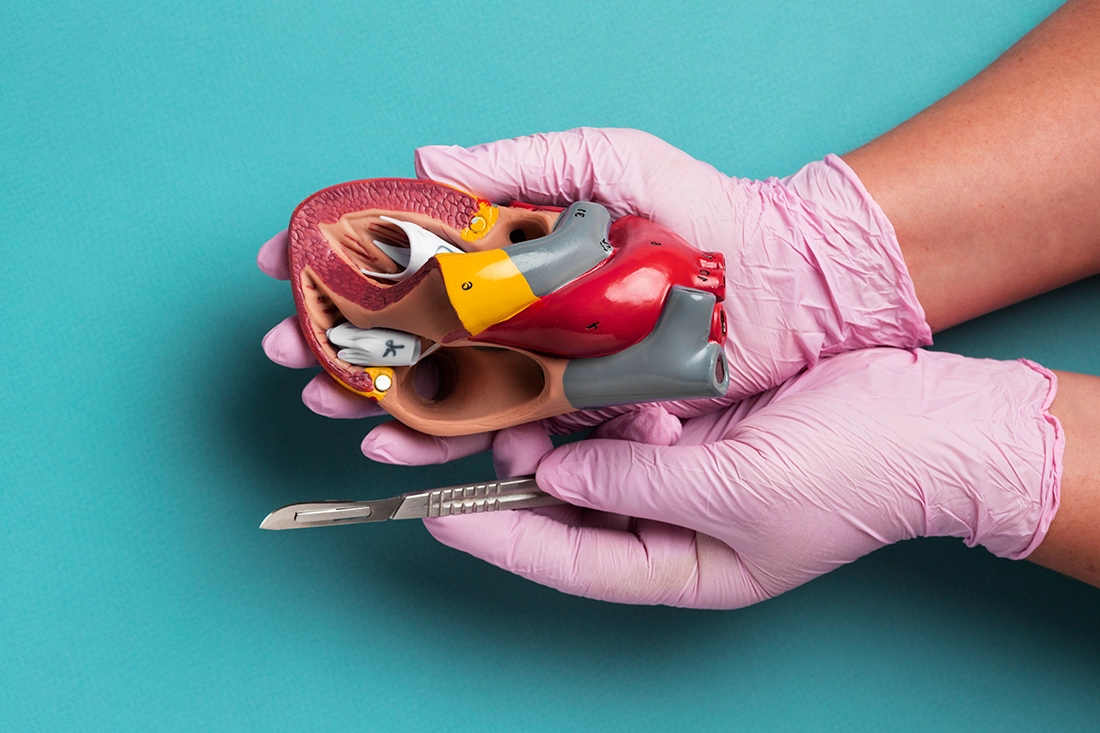
Preparing for open-heart surgery in Turkey requires many preparations and equipment, perhaps the most prominent of which are the following :
- Talk to the treating physician about all the details related to open-heart surgery in Turkey, and adequate knowledge of the expected results and what awaits the patient during the hospitalization and recovery phase .
- It is necessary to verify the general health condition before undergoing open-heart surgery, which is done by performing the following tests: complete blood count, blood glucose measurement, liver and kidney function tests, bleeding and clotting speed tests, examination of the heart and major blood vessels using ultrasound. Specialized ultrasound (echo waves & color Doppler), electrocardiogram procedure .
- For those who take blood thinners (thinning medications such as aspirin, heparin, or Clexane), they should stop taking these medications after consulting the treating physician for a period of no less than 3 weeks before undergoing surgery, in order to avoid bleeding and reduce the appearance of bruising and local swelling as much as possible .
- There is no doubt that smoking is very harmful to health, and may be a major cause of the reason for which open-heart surgery was recommended, so all heart patients should completely quit smoking. As for smokers, it is recommended to stop smoking for a period of no less than 4 weeks before undergoing open heart surgery in Turkey .
- Performing open-heart surgery involves the patient undergoing general anesthesia, so he should fast for at least 6-8 hours before the scheduled surgery date .
Steps for performing open heart surgery in Türkiye
Open heart surgery is performed in Turkey according to the following steps :
- The patient is subjected to general anesthesia, after ensuring that he is fully fit for general anesthesia .
- First, the surgeon makes a surgical incision approximately 20-25 cm long , in the lower chest area .
- To access the heart muscle, the doctor opens the rib cage where the ribs connect to the sternum (the cartilage connection) .
- To empty the heart muscle of blood, and to ensure the continuity of blood circulation in the body naturally to maintain the integrity of the body’s tissues and organs, the treating physician connects the patient to a cardiopulmonary bypass machine, which replaces the heart, through which blood flow and circulation are transferred away from the heart muscle .
- At this stage, the doctor begins working to correct the targeted defect from the beginning (replacing a damaged valve, repairing part of the heart muscle, repairing a birth defect, partial or complete replacement of a blood vessel, transplanting a new heart... etc.) .
- Once completed, the doctor restarts the heart, closes the rib cage, then sews up the surgical incision using some cosmetic threads, and finally places sterile bandages on the site of the surgical incision .
Hospitalization and recovery period after open heart surgery
Hospitalization and recovery period after open heart surgery in Türkiye
- Once the open-heart surgery procedure is completed, the patient is transferred during the first days to the intensive care room, with vital signs monitored accurately and in detail in anticipation of any possible side complications .
- Once you wake up from the effect of general anesthesia, the patient will notice the presence of one or more drainage tubes located in the chest area, which is a completely normal procedure aimed at draining any fluids or blood collections that may form in the area around the heart in the rib cage .
- It is necessary to take care of the surgical incision area and ensure its cleanliness on a regular basis, in order to avoid any local infection. Also, if you feel severe pain or redness in the wound area, you must seek specialized medical advice immediately .
Complications of open heart surgery
Does performing open-heart surgery in Turkey involve any side effects or potential complications?
There is no doubt that open-heart surgery is essentially a complex surgical procedure that includes many details, so there are many health risks that may arise after performing open-heart surgery, but it is worth noting that with the necessary preventive measures taken, the chances of side effects and disease complications occurring are reduced. The potential is as low as possible. In general, the most prominent risks associated with open-heart surgery include the following :
- Side effects resulting from general anesthesia, such as hypersensitivity to the anesthetic substance itself or a sharp and sudden drop in blood circulation .
- Infection and inflammation at the site of the surgical incision in the chest area (to prevent this from happening, it is recommended to take antibiotics and anti-inflammatories on a regular basis in accordance with the recommendations of the treating physician) .
- Internal bleeding (the patient’s vital signs are monitored during the post-operative stage for early detection of any possible blood bleeding) .
- Suffering from pulmonary embolism or deep vein thrombosis (preventive doses of Clexane can be given, in addition to paying attention to feeding the patient with intravenous solutions in sufficient quantities) .
- Irregular heart rate (a symptom that can be dealt with) .
- Difficulty breathing (the situation is controlled by giving the patient oxygen or by connecting him to a ventilator) .
Important notes about open-heart surgery in Türkiye
- The steps of open-heart surgery include opening the rib cage where the sternum meets the ribs. Healing of these bones usually requires a period ranging between 2-6 months, so during this period it is prohibited to carry any heavy objects or exert any strenuous physical effort .
- You should consult your doctor immediately if one or more of the following warning signs appear :
- Inflammation or redness of the wound site .
- Purulent secretions appear from the wound site .
- Swelling of the body or accumulation of fluid under the skin .
- Feeling short of breath accompanied by heart palpitations .
- Frequent coughing .
The cost of open heart surgery in Türkiye
Open-heart surgery is generally classified as one of the complex surgical procedures, but in Turkey we make sure that the costs are as economical as possible to suit everyone’s personal budget, while also ensuring that the final therapeutic results are the best ever .
In general, Turkey has the latest technologies and equipment necessary to perform open-heart surgery, at acceptable prices, which are the lowest compared to countries in the European Union and the United States of America .
Also, in the same context, the cost of performing open-heart surgery in Turkey varies depending on a group of factors and variables, perhaps the most important of which are :
- The type and extent of preparatory procedures before undergoing open-heart surgery in Turkey .
- Required surgical procedures (repair or replace a damaged valve, repair of congenital defects in the heart muscle, transplantation of a new heart, etc.) .
- The extent of experience and skill of the medical staff performing open-heart surgery in Turkey .
- The extent of fame and size of medical equipment in the selected hospital .
Advantages of performing open heart surgery in Türkiye
Turkey is the preferred destination for foreigners and tourists to undergo open-heart surgery, as Turkey occupies a prominent global position in this regard, for the following reasons :
- There are the best doctors and experts in Turkey in the field of heart surgery in general and open heart surgery in particular. They have the experience and skill necessary to deal with any case, no matter how difficult it is, which they have acquired through hundreds of cases that they have dealt with over the years with unparalleled success .
- There are many hospitals and specialized medical centers in Turkey, which include the best and most modern medical equipment necessary .
- Turkish hospitals provide medical services according to the highest international standards, and at an economical cost that suits everyone .
- We understand very well that the time factor is essential in such cases, so we always make sure that there are no waiting lists, and that all required procedures are completed within a short period of time, without any significant complications or obstacles, under the supervision of professionals who seek to meet all personal requirements. They are keen to give their patients the necessary comfort and privacy .
- In Turkey, we are keen to follow the latest international therapeutic and diagnostic protocols, so the success rate of open heart surgery in Turkey is the highest in the world.